



Kitchen Cabinets in Westminster, CO often face a stubborn, frustrating problem that sneaks up over time: grease buildup. Cooking oils, airborne food particles, and daily kitchen activity quietly coat cabinet surfaces until they look dull, sticky, and worn. Left untreated, grease can attract dust, discolor finishes, and even damage wood or laminate. Many homeowners try quick fixes that only smear residue or strip protective coatings. The good news is that grease can be removed safely and effectively without harming your kitchen cabinetry. With the right approach, materials, and timing, you can restore your kitchen’s clean appearance and protect your cabinets for years to come. This guide explains exactly how to do it the right way.
Why Grease Builds Up on Kitchen Cabinets Faster Than You Think
Grease doesn’t just come from splatters. It travels through the air as microscopic particles released during frying, sautéing, and baking. These particles rise, cool, and settle on cabinet doors, frames, and hardware.
In many kitchens, especially those used daily, grease combines with moisture and dust. This creates a sticky film that is harder to remove than simple dirt. Upper cabinets near the stove are usually affected first, but lower cabinets aren’t immune, especially in compact kitchens with limited ventilation.
Climate can also play a role. Seasonal temperature changes may cause finishes to expand and contract slightly, allowing grease to cling more easily. Over time, what started as a thin film becomes a stubborn layer that requires more than a basic wipe-down.
Why Harsh Cleaners Can Ruin Kitchen Cabinet Finishes

It’s tempting to grab the strongest cleaner under the sink, but aggressive chemicals often do more harm than good. Many kitchen cabinet surfaces are protected by sealants designed to resist moisture, not abrasion.
Common risks of harsh cleaners include:
- Dulling or stripping protective finishes
- Discoloration of stained wood
- Clouding on painted surfaces
- Weakening of veneer adhesives
- Premature aging of cabinetry materials
Products containing ammonia, bleach, or heavy solvents may remove grease quickly, but they can permanently damage cabinet surfaces. This is especially risky for custom kitchens or cabinetry sourced from a cabinet store or cabinet showroom with specialty finishes.
How to Identify Your Kitchen Cabinet Material Before Cleaning
Before choosing a cleaning method, it’s essential to know what you’re working with. Different materials react differently to moisture and cleaning agents.
Solid Wood Cabinets
These are durable but sensitive to excess water. Grease can soak into the grain if not cleaned properly.
Painted Wood Cabinets
Paint adds protection but can chip or dull if scrubbed aggressively.
Laminate Cabinets
Laminate resists moisture well but can peel if water seeps into seams.
Thermofoil Cabinets
These have a vinyl coating that can warp or bubble with heat and harsh chemicals.
Veneer Cabinets
Thin wood layers over engineered cores require gentle care to avoid lifting or cracking.
If you’re unsure, test any cleaner on a hidden area first.
Safe and Effective Supplies for Degreasing Kitchen Cabinets
You don’t need specialty products to clean grease effectively. Many safe options are already in most homes.
Recommended supplies include:
- Warm water
- Mild dish soap from brands like Dawn
- White vinegar (diluted)
- Baking soda
- Microfiber cloths
- Soft sponges
- Old toothbrushes for detailed areas
Avoid steel wool, abrasive pads, and rough brushes. These can scratch surfaces and remove finishes.
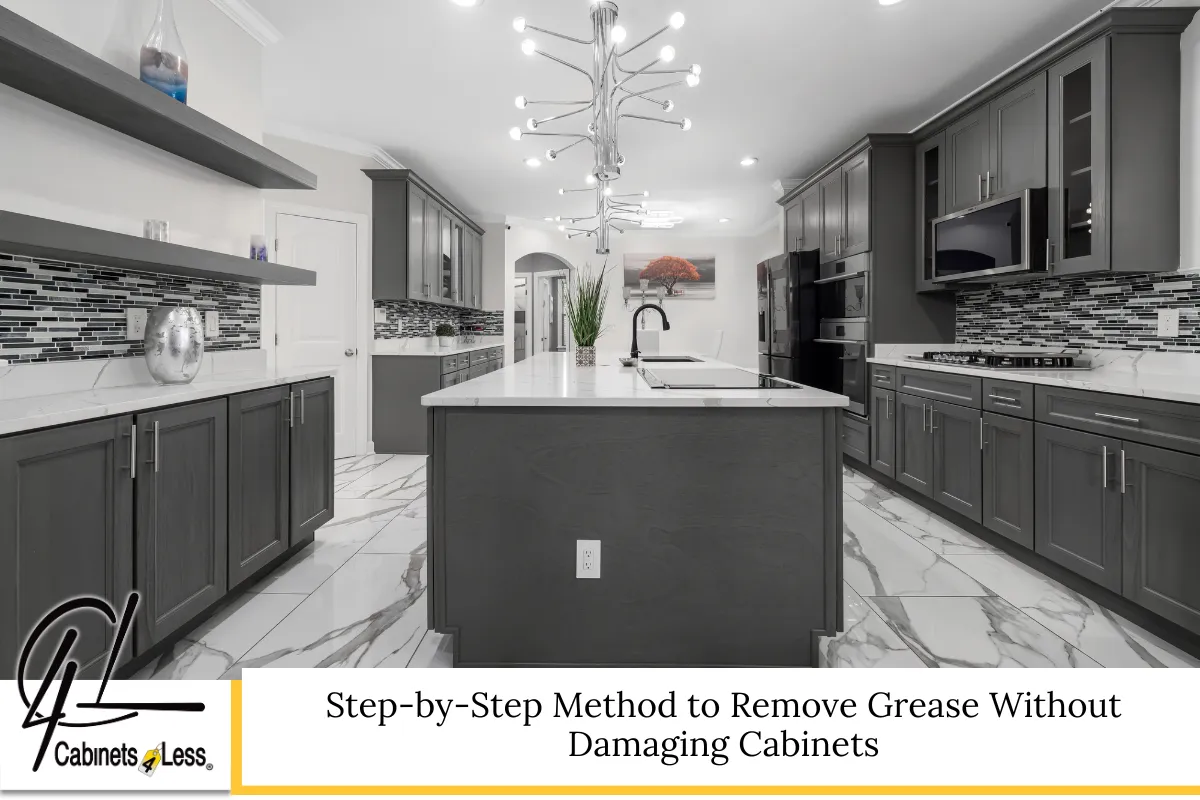
Step-by-Step Method to Remove Grease Without Damaging Cabinets
Step 1: Dry Dust First
Always start by removing loose dust and debris with a dry microfiber cloth. This prevents smearing grease during wet cleaning.
Step 2: Mix a Gentle Cleaning Solution
Combine warm water with a few drops of mild dish soap. The goal is to break down grease, not soak the cabinets.
Step 3: Wipe With the Grain
Lightly dampen your cloth and wipe in the direction of the wood grain or cabinet finish pattern. Work in small sections.
Step 4: Address Stubborn Areas
For heavier buildup, apply a baking soda paste using a soft cloth. Gently rub, then wipe clean.
Step 5: Rinse Lightly
Use a separate damp cloth with clean water to remove residue. Avoid over-wetting the surface.
Step 6: Dry Immediately
Dry cabinets thoroughly with a clean towel to prevent moisture damage.
Read How Do You Keep White Kitchen Cabinets in Westminster, CO From Yellowing?
Natural Cleaning Options That Work on Grease
Many homeowners prefer natural solutions, especially in kitchens where food is prepared.
Vinegar and Water Solution
A mixture of one part vinegar to two parts warm water can cut through grease effectively. Vinegar helps dissolve residue but should be diluted to protect finishes.
Baking Soda for Spot Treatment
Baking soda is mildly abrasive and ideal for sticky spots around handles and corners.
Oil Soap for Periodic Deep Cleaning
Products similar to Murphy Oil Soap can be used occasionally on wood cabinets to lift grime while conditioning the surface.
Natural methods are effective when used consistently rather than waiting for heavy buildup.
Areas Most Commonly Missed During Cabinet Cleaning
Grease doesn’t settle evenly. Some spots are often overlooked:
- Cabinet tops above eye level
- Undersides near ranges
- Handles and knobs
- Inside edges of doors
- Cabinet frames near appliances
Regular attention to these areas prevents grease from spreading back onto cleaned surfaces.
How Often Should Kitchen Cabinets Be Cleaned?

Routine maintenance is easier than deep restoration.
- Light wipe-down: weekly
- Targeted grease removal near cooking areas: biweekly
- Full cabinet cleaning: every 3–4 months
Kitchens with frequent cooking or limited ventilation may need more frequent care. Staying consistent preserves both appearance and value, especially for homes with updated kitchens or recently purchased kitchen cabinetry.
Preventing Grease Buildup on Kitchen Cabinets Long-Term
Cleaning is only half the solution. Prevention makes maintenance easier.
Improve Ventilation
Use your range hood consistently and clean its filters regularly.
Wipe Spills Immediately
Fresh grease is far easier to remove than dried residue.
Apply Protective Polish Sparingly
Occasional cabinet-safe polish can add a light barrier, but overuse attracts dust.
Adjust Cooking Habits
Cover pans when possible and avoid excessive oil splatter.
These habits extend the life of cabinets purchased from any cabinet showroom or custom provider.
When Grease Damage Signals a Bigger Cabinet Issue
Sometimes grease reveals deeper problems. Discoloration, peeling finishes, or warped doors may indicate aging materials or improper sealing. In these cases, cleaning alone won’t restore the original appearance.
This is often when homeowners begin exploring cabinet refinishing, door replacement, or consultation with cabinetry specialists to evaluate long-term options for their kitchens.
Kitchen Cabinets in Westminster, CO – C4L Cabinetry

At C4L Cabinetry, we understand how important clean, well-maintained kitchen cabinets are to the look and function of your home. We work with homeowners throughout Westminster, Colorado who want expert guidance on caring for kitchen cabinets and planning future upgrades. Our cabinet solutions focus on quality materials, thoughtful design, and long-term durability. While we do not handle cabinet installation directly, we are happy to refer you to reputable local contractors we trust. If your cabinets are showing signs of wear, grease damage, or you’re considering an upgrade, call us at (303) 226-4010 or fill out our contact form. We’re here to help you make confident decisions for your kitchen.
Frequently Asked Questions
Can steam cleaning be used on kitchen cabinets?
Steam cleaning is generally not recommended for kitchen cabinets. While steam can dissolve grease quickly, the high heat and moisture can penetrate seams, soften adhesives, and damage finishes. Wood cabinets are especially vulnerable to warping and cracking from steam exposure. Even laminate and thermofoil surfaces may peel or bubble over time. Safer alternatives include gentle soap solutions and targeted spot cleaning with baking soda. If grease buildup is severe, it’s better to clean gradually over multiple sessions rather than using steam.
Is it safe to use degreaser sprays made for appliances on cabinets?
Most appliance degreasers are too strong for cabinet surfaces. These products are formulated for metal and glass, not wood or finished materials. Using them on cabinets can strip protective coatings, discolor paint, or leave residue that attracts more grime. If you choose a commercial cleaner, ensure it is specifically labeled safe for kitchen cabinetry. Always test on a hidden area first and avoid frequent use to protect the cabinet finish.
Why do white kitchen cabinets show grease more easily?
White and light-colored cabinets reflect light, making grease and discoloration more visible. Even a thin film can appear yellowed or dull over time. This doesn’t mean white cabinets are harder to maintain, but they do require more frequent light cleaning. Regular wipe-downs prevent grease from oxidizing and staining the surface. Using gentle cleaners consistently keeps white kitchens looking bright without the need for aggressive scrubbing.
Can cabinet grease cause long-term damage if ignored?
Yes, prolonged grease buildup can lead to permanent damage. Over time, grease can soften finishes, attract abrasive dust, and discolor wood or paint. In severe cases, it can weaken joints, loosen hardware, and contribute to peeling veneers. Ignoring grease also makes future cleaning more difficult, often requiring stronger methods that increase the risk of surface damage. Regular maintenance helps preserve both appearance and structural integrity.
Should cabinets be resealed after deep cleaning?
In some cases, resealing can be beneficial, especially for older wood cabinets that have lost their protective layer. If cleaning leaves the surface looking dry or uneven, a cabinet-safe sealant or polish may help restore protection. However, resealing is not always necessary after routine cleaning. If you’re unsure, consult a cabinetry professional who can assess the condition of your cabinets and recommend appropriate care without over-treating the surface.
Disclaimer: This article is for general informational purposes only and does not replace professional advice. Cleaning methods may vary based on cabinet materials and condition. Always test products in an inconspicuous area and consult a cabinetry professional for specific concerns.
Read What Makes Westminster Bathroom Cabinets Look Expensive?


